
What to expect from an estimate, how we finish drywall, and what to prepare before work starts.
How do I get a drywall estimate?
Call (845) 210-4477 or send the estimate form with daylight photos of the damage and the surrounding texture. We still look on site when finish level or plaster is unclear. Phone is fastest Mon–Fri 7:30–5:00.
Where do you work?
From Middletown, NY 10940 across Orange County — Chester, Florida, Goshen, Warwick, Minisink Valley, and nearby towns. See our areas page. If you are close but not listed, call and ask.
What drywall work do you not take?
We do not fix leaks, do electrical work, dry the house, remediate mold, or test for or remove asbestos. We replace water-damaged board after the leak is fixed and the cavity is dry. Primer and paint are your painter’s job.
How long will my repair take?
A doorknob hole is not a water-damaged ceiling. We give a schedule when we see the rooms — we do not invent same-week guarantees for every call.
What should I prep before you arrive?
Clear 3–4 feet from the wall, take down pictures on that plane, and tell us if it is plaster or drywall. Kids and pets need a closed door when we sand.
Should I call or use the form?
For an active leak, contact your plumber or roofer first. Call us to discuss drywall work after the leak is fixed and the cavity is dry. The estimate form opens your email app; attach photos there and send the email.
Can you match orange peel or knockdown?
Orange peel is a fine sprayed bump. Knockdown is sprayed texture flattened with a knife. We compare a sample first. Uneven texture or texture buried in paint may need a skim coat—a thin layer of joint compound over the whole surface—then sanding.
Do you do Level 5?
Yes. Level 4 finishes taped joints, inside corners, screw heads, and outside corner strips for flat paint. The paper between joints stays uncoated. Level 5 adds a thin skim coat of joint compound over the entire surface, then sanding. It helps under dark paint, eggshell or glossier paint, or light from a side window. The estimate names the finish.
Will there be dust in an occupied house?
Some, even with plastic and vac-assist. Anyone promising zero dust is selling a line. We plan protection; you plan a cleanup pass.
Do you hang new board for remodels?
Yes — hang, tape, mud, and the finish level you choose. Punch-list commercial patches are also on the services list.
Services · Guides · Drywall repair cost factors · Areas · About Scotchtown Drywall · Contact · Request an estimate
Call (845) 210-4477 — fastest Mon–Fri 7:30–5:00.
A nail or screw pop is a fastener pushing the face of the drywall out. Corner bead is the metal or paper-faced strip on outside corners. We replace bent bead. To feather a patch, we spread joint compound (mud) thin past its edges. Orange peel is a fine sprayed bump. Knockdown is sprayed texture flattened with a knife. Popcorn is an older sprayed ceiling texture; the homeowner must arrange testing for asbestos on older ceilings before anyone scrapes. Wood lath is the narrow wood strips behind plaster.

Repair & patch
Holes, cracks, nail pops, and bent corner bead. We tape the patch and feather the mud so the edge doesn’t read after paint.

Hang sheetrock
New board on ready framing for additions, basements, and gutted rooms, then tape and mud to the finish named on the estimate.
Tape & finish
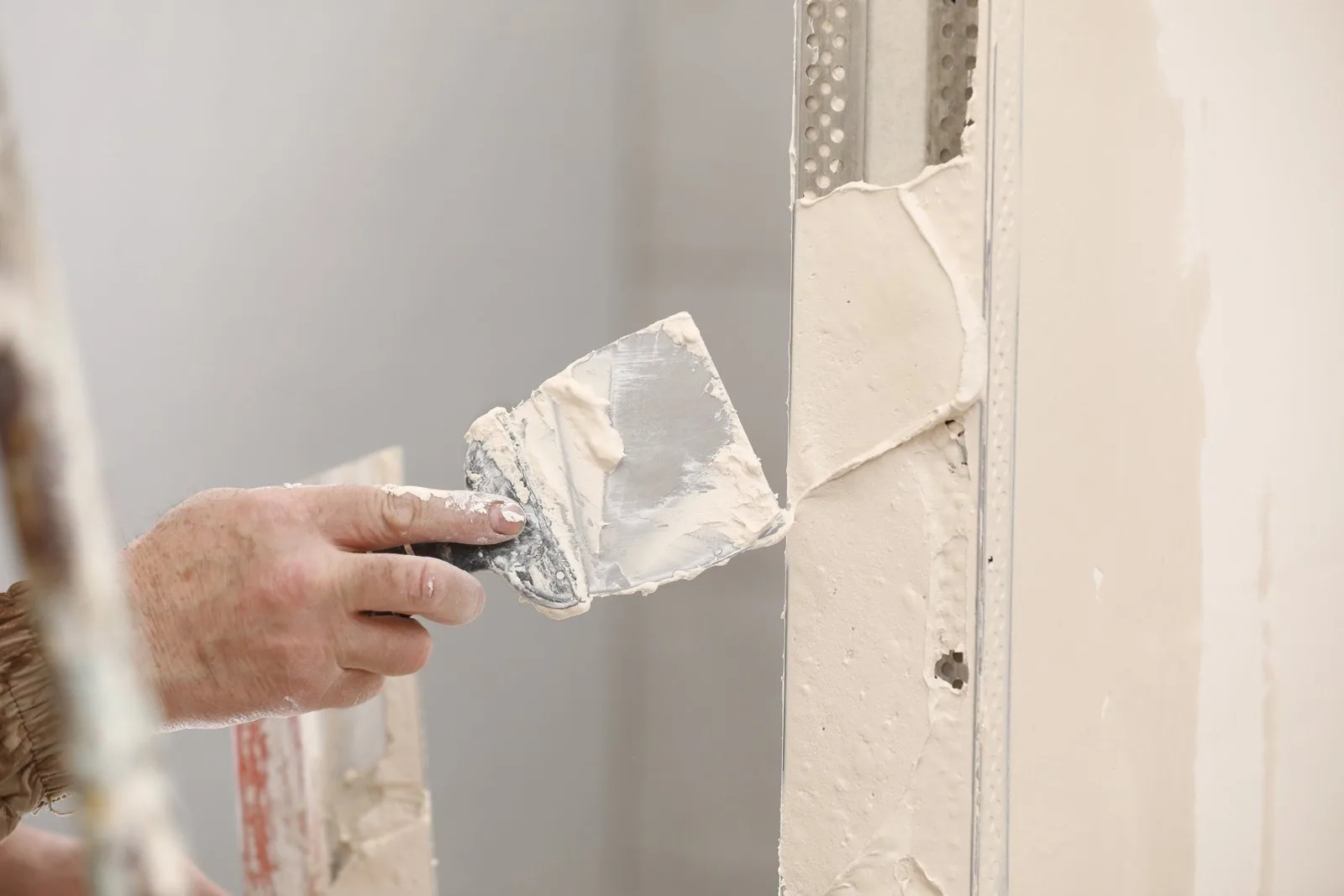
Tape set in joint compound (mud), then coats and sanding. Level 4 is the usual wall under flat paint. Level 5 adds a skim coat over the whole wall so seams don’t show under dark paint, gloss, or side light.

Water damage
After the leak is fixed and the cavity is dry, we cut soft board back to the framing, hang new, and tape the patch.

Texture & skim
Match orange peel or knockdown, skim a wall smooth, or scrape popcorn and skim the ceiling. We don’t test or remove asbestos.

Plaster repair
Cracks and loose plaster on wood lath, repaired as plaster.

Commercial
Offices and small tenant spaces. Days on site are written in the scope.
Level 4 or Level 5
Level 4 starts with paper tape embedded in joint compound (mud). We add two more coats on flat joints, coat inside corners, and give screw heads and corner bead three coats, then sand. Corner bead is the metal or paper-faced strip on outside corners. The field of the board—the paper between joints—is not coated. This is the usual finish under flat paint.
Level 5 includes all the Level 4 work plus a skim coat: a thin layer of joint compound over the entire wall or ceiling, then sanding. It evens out the paper and joints so seams and screw heads are less likely to show through dark paint, paint with sheen (eggshell, satin, or semi-gloss), or side light from a window. It does not mean thicker mud on the joints, and it does not straighten wavy studs. We leave it smooth and ready for primer. Primer and paint are the painter’s job.