
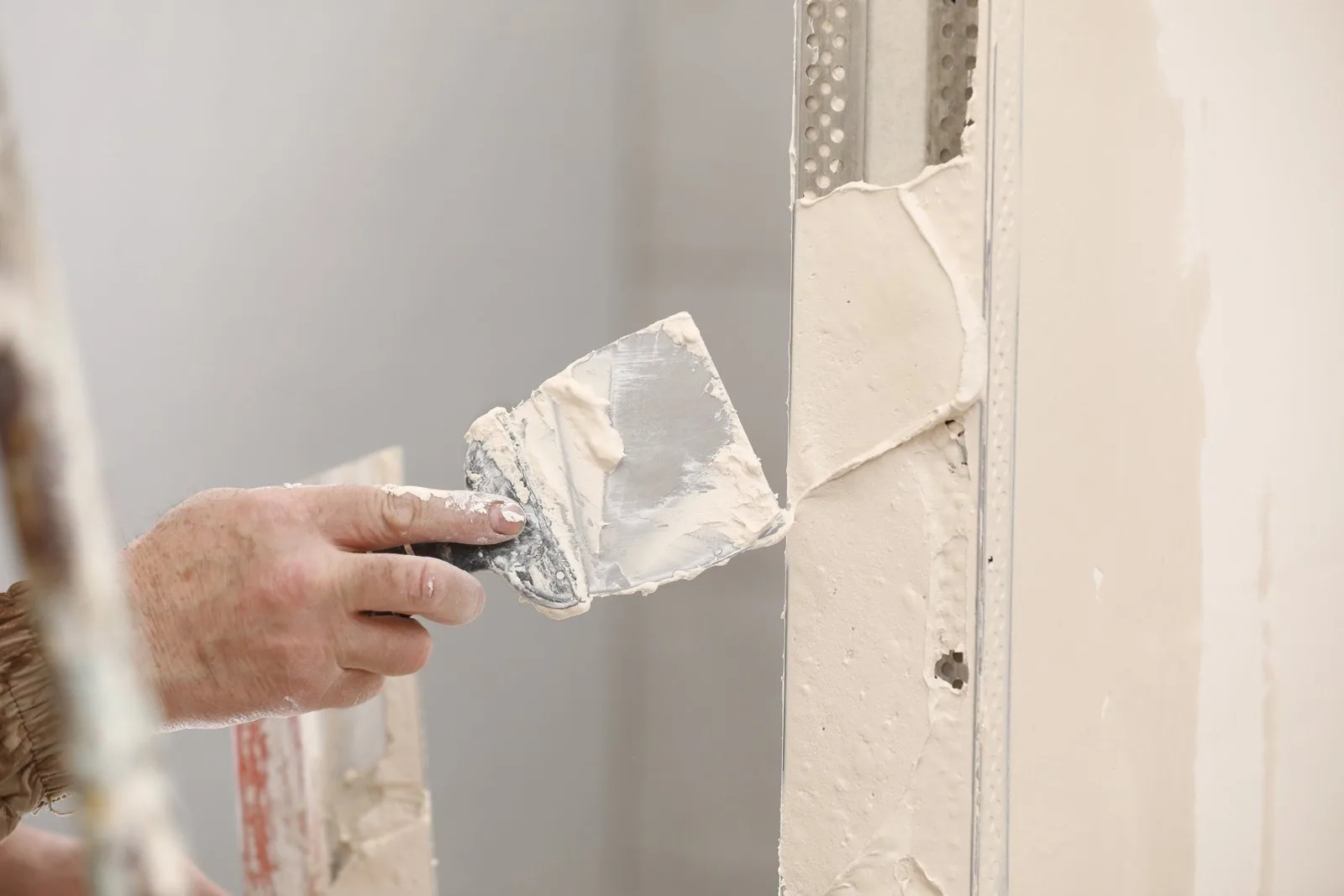
Tape and finish is where a room of raw board becomes a paintable surface. Level 4 — paper tape in joint compound, coats on joints, inside corners, screw heads, and corner bead, then sanding — is the standard finish under flat paint. Level 5 adds a thin skim coat over the entire surface so seams and fasteners stop showing under dark colors, sheen, and hard side light. We finish new hung board and skim existing walls, and we name the level room by room on the estimate, because "finishing" without a level attached is not a scope.
What the finish levels mean — and what they do not
Level 4 embeds paper tape in mud, adds two more coats on flat joints, coats inside corners, and gives screw heads and corner bead three coats, then sanding. The paper field between joints stays uncoated, and under flat paint that reads fine. Level 5 does all of that and then skims the whole surface — a thin layer of joint compound over wall or ceiling — and sands it, so the difference between joint and field disappears under demanding light and paint. The levels come from the gypsum industry's GA-214 finish standard; they are specifications, not certifications, and anyone can name them.
Honest limits: Level 5 evens the surface; it does not straighten wavy studs, and it does not replace primer. Glossy paint over Level 4 will still show seams. And texture is a separate decision — a smooth Level 5 wall and a textured wall are different finishes, priced differently.
When Orange County rooms call for a Level 5 skim
The pattern is always the same: big light and demanding paint. West-facing great rooms on the hills above the Wallkill valley take hard afternoon side light across whole walls. The farmhouse renovation trend around Warwick and Goshen means deep greens and navy paint with eggshell sheen, which shows every taped joint under a flat-white wall would hide. Finished basements with low ceilings and can lights put raking light across the ceiling from a foot away. We walk the room, look at where the windows sit and what paint is going on, and write the level that matches — including writing Level 4 where that is honestly enough.
How a finishing job runs
Coats go on in sequence with drying days between them; mud shrinks, and a rushed coat sands back to the tape. Sanding is where the finish is actually made: we check the surface with a light held flat against it — the raking light trick — because a wall that looks perfect face-on can be a washboard from the side. A Level 5 skim follows the same discipline over the whole plane, then a final sand and cleanup. When we leave, the surface is ready for primer; your painter primes, and the paint sheen choice still matters more than most people expect. See matching paint after drywall work for why.
What is included
- Paper tape on flat joints
- Metal or paper-faced corner bead
- Coats and sanding to Level 4, or Level 5 skim where specified
- Sanding checked with a light along the wall
- A skim over sound existing walls, quoted separately from repairs
What is not included
- Primer and paint
- New board unless listed in the scope — see hang sheetrock
- Repairs to moving framing — a skim will not hold a crack that flexes
- Texture — smooth finishes only on this service; see texture and skim
What affects the cost
Square footage first: a Level 5 skim roughly doubles the finishing labor on a room because the whole surface gets coated and sanded, not just the joints. Ceiling height and scaffolding, the number of corners and beads, and how much protection an occupied house needs all move the number. Skimming existing walls adds preparation — loose paint and failing texture come off before the skim goes on. We name Level 4 or Level 5 room by room in the written estimate. Call (845) 210-4477 or send the estimate form with photos and the paint plan.
Recent finish work
“We wanted a navy wall in the living room with a big side window, and they talked us into the Level 5 skim instead of talked us up. Painted, the wall reads as one piece — no seams anywhere.”
Melissa R. · Newburgh · Level 5 finish“Straight answer on the rental: flat white paint, no big windows, Level 4 is enough. They wrote it that way and the price matched. Not everyone down-sells you.”
Dan K. · Middletown · Tape and finishQuestions homeowners ask about Level 4 and Level 5
Is Level 5 worth it?
Under flat white paint, usually not — Level 4 is the industry standard for a reason. Under dark colors, eggshell or glossier sheen, or a wall raked by side light from a window, Level 5 is the difference between a wall that reads as one surface and a wall that shows every joint. We look at the room and the paint plan and write what the room needs.
Does Level 5 fix wavy or uneven walls?
No, and anyone who says otherwise is overselling. A skim evens the surface texture — paper, joints, fasteners — but it follows the plane underneath. Out-of-plane framing is a carpentry problem, and we will tell you when we see it instead of skimming over it.
Which paint sheen shows the most flaws?
Gloss shows everything, eggshell and satin show a lot, flat hides the most. Sheen does not change the finish level your wall needs — it changes how honest the wall has to be before paint. A skimmed Level 5 wall carries eggshell beautifully; that is the whole point of the extra labor.
Before you schedule
When does Level 5 make sense?
Consider it for dark colors, paint with sheen (eggshell or glossier paint), and walls lit from the side. A full skim makes seams and screw heads less likely to show through paint.
Does Level 5 replace primer?
No. Your painter still needs to prime the finished drywall before painting. Level 5 makes the surface even; primer makes the paint stick and read true.
Can you skim an existing wall?
Yes, if the surface underneath is sound. Loose material, failing texture, and peeling paint have to be removed before the skim can bond.
How is Level 4 different from Level 5 on the wall?
Level 4 finishes taped joints, inside corners, screw heads, and corner bead, then sanding — the paper field stays uncoated. Level 5 adds a thin skim coat over the entire surface, then sanding, so the whole plane reads the same under demanding light and paint.
Do you finish both sides of a new wall?
Only the sides written on the estimate. A closet or a chase is easy to leave off if nobody named it, and we flag unnamed surfaces before work starts.
How do I decide between Level 4 and Level 5?
Tell us the paint color and sheen and where the windows sit; we look at the room's light and recommend a level in writing. When Level 4 is honestly enough, we say so.
How do I get an estimate?
Call (845) 210-4477 or send the estimate form with room photos, rough dimensions, and the paint you are planning.