

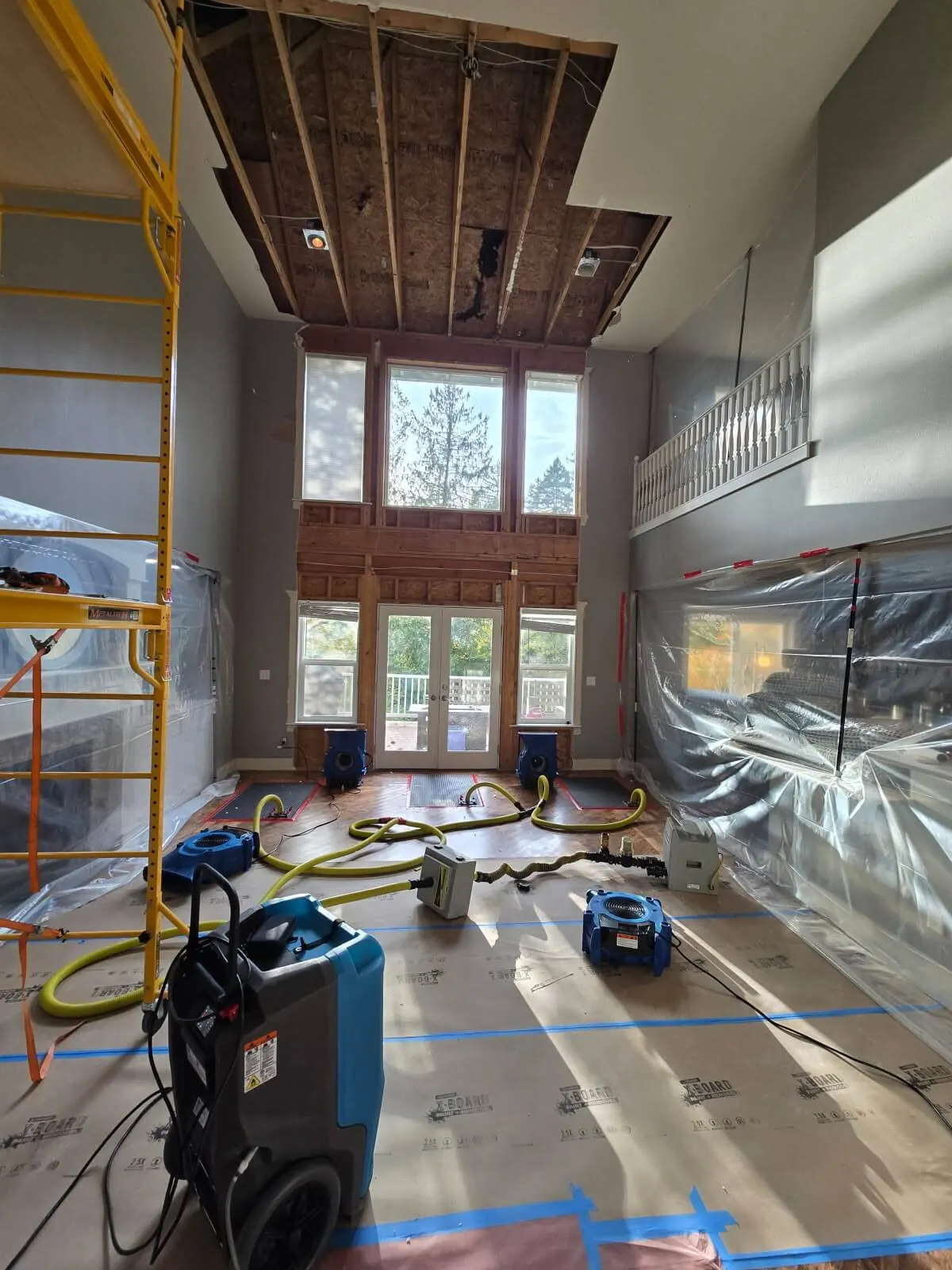
Drywall water damage repair is a cut-out, not a skim. Soft, stained, or sagging board comes out back to solid framing; new board goes up; we tape, finish, and match the texture. Everything waits on two conditions we do not bend on: the leak is fixed by your plumber or roofer, and the cavity is dry. Closing a wet wall traps the problem inside and the repair fails — we would rather reschedule than hang board over damp insulation.
What water damage repair is — and what it is not
The stain on the ceiling is the map's edge, not the territory — water travels along joists and shows up feet from the breach. We probe the surrounding board, mark what is soft, and cut back to a hard edge on framing so the new board has solid fastening. Insulation above a wet ceiling is checked and replaced only when it is listed on the estimate, because that is a material and disposal line of its own. The finish matches the surrounding texture where we can; a heavy old pattern on the rest of the ceiling may mean a wider skim so the patch does not read as a square.
What it is not: we do not find or fix leaks, dry structures, or remediate mold. Your plumber, roofer, or remediation contractor owns that work, in that order, before we board. Stain-blocking primer and finish paint stay with your painter — and a water stain will bleed through plain paint, so that primer step is not optional.
Where Orange County water damage comes from
Ice dams are the winter headline: heat escaping into the attic melts snow, water refreezes at the cold eaves, backs up under the shingles, and the bedroom ceiling below turns tea-colored — the classic call from the colonials and ranches around Monroe, Chester, and the hill towns. Frozen pipe bursts in unheated split-level additions run second in a polar snap. Off-season it is bathroom fan vents dumping into attics, condensate lines, and the slow drip at a chimney flashing that stains a ceiling for months before anyone notices. Every one of those is fixed at the source first; this guide covers the stain-vs-structure question we ask on every call.
How a water repair runs
When you call, tell us whether the leak is fixed and how long the cavity has been open — it changes what we schedule. On site we confirm the framing reads dry before cutting; if it does not, we stop and you give it more time or call the drying contractor. Then containment, cut-out, haul-away of the soft board, inspection of the insulation above, new board screwed to framing, tape and coats with drying days between, texture match, and cleanup. The painter's punch list after us is short and important: stain-blocking primer on the water marks, then paint.
What is included
- Cutting soft drywall back to sound framing
- Haul-away of damaged board
- New board secured to framing
- Tape, mud, and sanding
- Texture matching or a skim coat over the whole surface, as quoted
What is not included
- Finding or fixing roof and plumbing leaks
- Structural drying equipment and mold remediation
- Insulation replacement unless listed on the estimate
- Stain-blocking primer and finish paint — your painter's scope
What affects the cost
How far the soft board runs past the stain is the main driver — we probe before we quote — followed by ceiling versus wall work, texture matching, and insulation replacement if it is needed. Access and protection in an occupied house, and scheduling around drying time, also move the number. Photos help us prepare, but water damage almost always gets a site look before a price. Call (845) 210-4477 or send the estimate form once the leak is fixed.
Recent water damage repairs
“Ice dam stained the whole upstairs hall ceiling. They would not schedule the repair until the roof was fixed and the attic was dry, and they checked it with a meter on the day. The patch blends in — you would never know the ceiling was opened.”
Tracy A. · Wallkill · Water damage repair“Bathroom leak softened a stretch of kitchen ceiling. They cut it back to the joists, matched the texture, and told us straight that the yellow ring needed a blocking primer from our painter. It did. Straight advice at every step.”
Gene F. · Port Jervis · Ceiling water damageQuestions homeowners ask about water damage
Can wet drywall be dried, or does it have to be replaced?
Surface damp on solid board can dry in place with airflow. Board that has swollen, sagged, or gone soft has lost its paper bond and gypsum structure, and no fan brings that back — it gets cut out. The line between the two is why we probe the area instead of quoting from the stain.
How long after a leak can the drywall be replaced?
When the source is fixed and the framing and cavity read dry — sometimes days, sometimes longer after a big soak. Drying is not a calendar guess; it is a moisture check, and we do it before board goes up. Hanging drywall on wet lumber is how you grow mold inside a new ceiling.
Will the stain come back after the repair?
The stain does not come back through a proper repair if the leak is truly fixed — but bare paint over the old water mark will flash, which is why your painter uses stain-blocking primer there. If a stain reappears after primer, the leak is not done and you call the roofer or plumber, not us.
Before you schedule
Can you replace a damaged ceiling section?
Yes. We cut back to sound framing, fit new board, and tape and finish it, with the texture matched or skimmed as quoted.
When can you close the wall?
After the leak is repaired and the exposed cavity and framing are dry. We check moisture on the day and will not hang board over damp lumber.
Who fixes the leak first?
Your plumber or roofer fixes the leak. Once the cavity is dry, we replace the damaged board and finish it. We do not do plumbing, roofing, drying, or mold work.
What if the damage extends past the stain?
It usually does. We check the surrounding board and cut back to the full soft area; if the opening needs to grow past the first mark, we discuss it with you before cutting.
Do you treat mold?
No. If you see mold, have it handled before we close the wall. We replace soft board after the leak is fixed and the cavity is dry.
Do you replace wet insulation?
Only when insulation replacement is written on the estimate. If you suspect soaked insulation, say so when you call so the scope covers it.
Will the ceiling patch match the old texture?
We match a simple texture where we can. A heavy old pattern may need a wider skim so the patch does not read as a square.
How do I get an estimate?
Call (845) 210-4477 or send the estimate form once the leak is fixed — photos of the stain and ceiling line, your town, and how long the cavity has been drying.