
Not every hole needs a full sheet. Not every soft stretch is a two-inch patch. Scotchtown Drywall works from Middletown, NY 10940. This is how we decide between a patch and a cut-out on walls and ceilings in Orange County houses — and how you can tell which call you are looking at before we arrive.
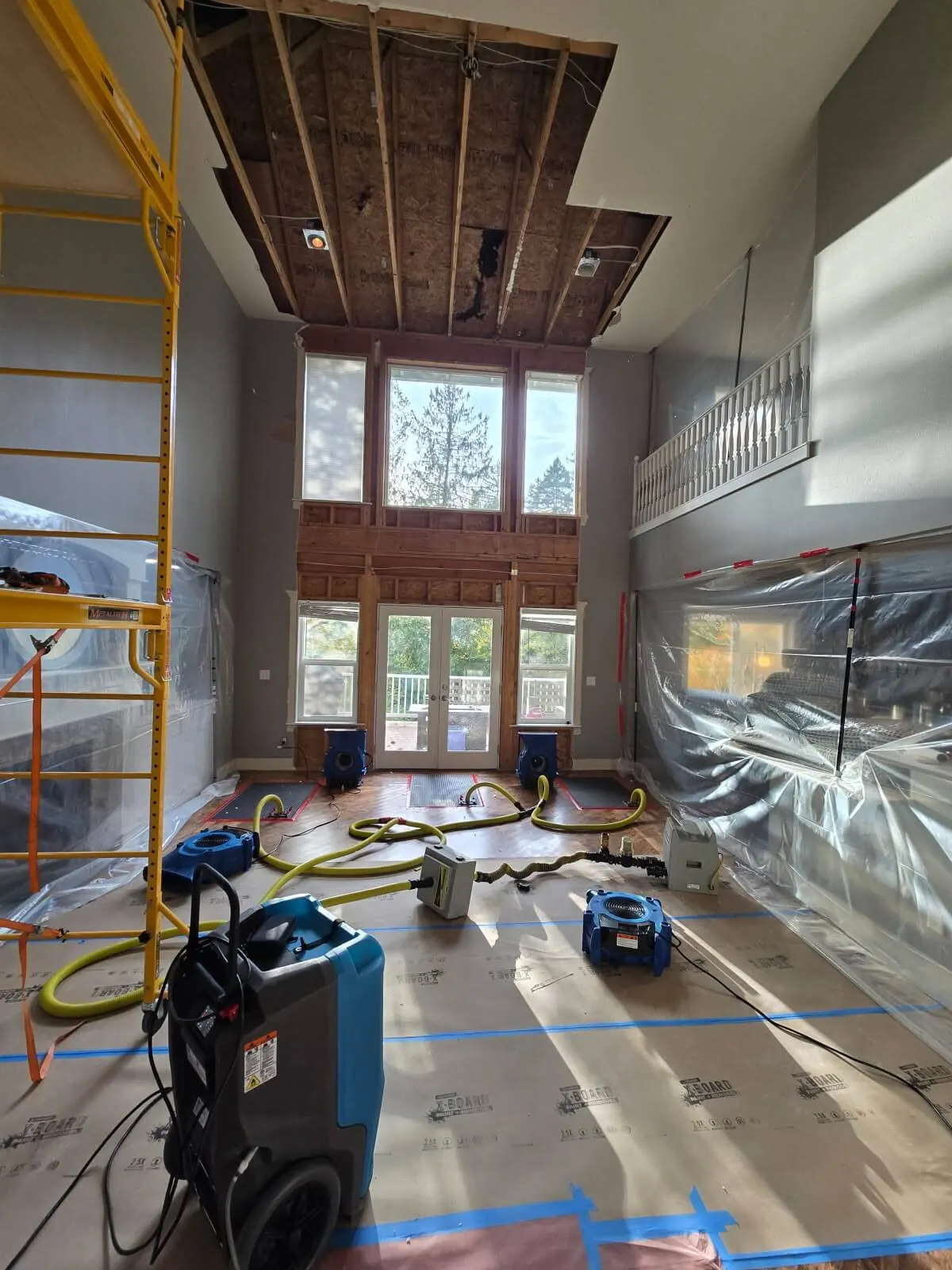
A patch is enough when the board around it is sound
A doorknob dent, a clean cut for an electrician, or a few nail pops on a tight board are patch work. We cut back to solid paper, float the repair, and feather it into the field. Level 4 under flat paint is the usual finish. Level 5 is for dark or glossy paint, or a wall that takes hard side light from a window.
Replace a section when the edge will not hold tape
Soft board after a leak, a ceiling that sags between joists, or a seam that opens again after a prior patch means the paper and gypsum are done. Screwing a new patch onto a soft edge just moves the crack. We cut back to framing, hang new board, and tape to a hard edge. On plaster, screwing drywall over a loose ceiling only hides the problem until the next winter.
Water damage is not a skim-coat job
Ice at the eaves and a soft bathroom ceiling are the usual Orange County calls. The roof or the plumbing has to be fixed, and the cavity has to dry, before new board goes up. We will not close a wet wall. If insulation is soaked, say so when you call. Related: water damage drywall and repair and patch.
Texture and plaster change the call
Orange peel and knockdown can be matched when the old texture is even. If the middle of the wall is worn flat, a spray will not hide the square. We quote a skim instead. Village plaster on lath in Chester or older Middletown streets is a different repair than sheetrock. Tell us what you think the wall is. We check before we price it.
A quick homeowner's field guide
- Push the wall around the damage: firm means patch, spongy means cut-out.
- Follow the crack: a straight tape-line crack is usually patchable; a stepped or spreading one is not.
- Check the history: patched twice and back again means the repair, not the mud, was wrong.
- Water first: any stain or soft spot waits on the leak being fixed.
What the repair costs
Patch work is priced by the repair — cutting, backing, taping, finishing, and the texture match. Cut-out work adds demolition, disposal, new board, and usually more finishing, and water work can add insulation on top. Neither number is honest from a single photo, which is why the look-visit comes first and the numbers come after it. The cost factors page walks through what moves the estimate, and the estimate itself is free.
What homeowners tell us after
"The ceiling sagged after a bathroom leak and two painters said skim it. They probed it, showed us the soft gypsum, and cut it back to the joists instead. The difference between a patch and a proper repair, explained in one visit."
Vic S. · Chester · Water damage repairCall (845) 210-4477 or request an estimate. Also see how to prepare the room · All guides · Drywall repair cost factors · FAQ · Patch vs replace · Matching texture and Level 5 finish.
Questions homeowners ask
Can you patch over a soft ceiling?
No. Soft board comes out. We hang new board on dry framing after the leak is fixed.
Is a big hole always a full sheet?
Not always. We cut back to a hard edge. Sometimes that is a half sheet; sometimes it is more.
Do you match orange peel?
When the old texture is still even. Worn walls usually need a skim, not a spray.
Who decides patch or replace?
The wall does. We probe and tap during the look-visit and show you what we find before anything is priced — the estimate says which one and why.
How do I get a price?
Call (845) 210-4477. We look at the rooms and write the finish level before anyone starts.
Ready to talk through the job? Call (845) 210-4477 or request an estimate.